
For decades, dementia care has largely been understood as a model of support centred on safety, supervision, and managing decline. Families were often told that after diagnosis, the focus would be on comfort and care as abilities gradually diminished. However, a significant shift is taking place in how the global healthcare community finally understands dementia.
The World Alzheimer Report 2025 introduces a powerful and necessary reframe. Rather than viewing dementia care as purely supportive, it calls for a transition toward rehabilitation, maintenance, and enablement.
This shift challenges long-held assumptions. It suggests that people living with dementia are not simply passive recipients of care, but people who can continue to learn, adapt, engage, and maintain function when supported appropriately. For care providers, it requires a move away from static care models toward more dynamic, responsive, and personalised approaches.
Reimagining dementia care through rehabilitation
The World Alzheimer Report 2025 describes rehabilitation in dementia as a goal-oriented, personalised process that supports individuals to maintain independence, participation, and everyday functioning for as long as possible. This does not mean reversing dementia. Instead, it focuses on preserving what remains and strengthening what is still possible. Rehabilitation in this context includes cognitive stimulation, physical movement, emotional support, routine-building, and meaningful engagement.
Importantly, the report highlights that rehabilitation can be introduced at any stage of dementia, provided it is tailored to the individual. This reinforces the idea that care should not become more passive as the condition progresses, but rather more intentional.
Despite this, the report also points out a global gap. Rehabilitation is still not consistently integrated into dementia care systems, and many individuals do not receive this level of support. This gap is where forward-thinking care environments are beginning to lead change.
Why this shift matters for families and residents
For families, this new approach changes the narrative around dementia. Instead of focusing solely on decline, it opens the possibility of maintaining quality of life, independence, and connection for longer.
Research increasingly shows that personalised, goal-oriented dementia support can delay loss of function and improve day-to-day wellbeing. This includes maintaining mobility, supporting communication, encouraging participation in activities, and preserving emotional stability.
This is particularly important because dementia affects more than memory. It impacts identity, confidence, and a person’s sense of place in the world. When individuals are supported to continue engaging in meaningful ways, it reinforces their sense of self, even as cognitive changes occur.
How this approach comes to life at Livewell Estates
At Livewell Estates, this global shift toward rehabilitation is not theoretical. It is embedded in how care is delivered every day. Personalised dementia care at Livewell is built on the understanding that each resident’s abilities, preferences, and needs will change over time. Care is not fixed, but continuously adapted through observation, collaboration, and experience.
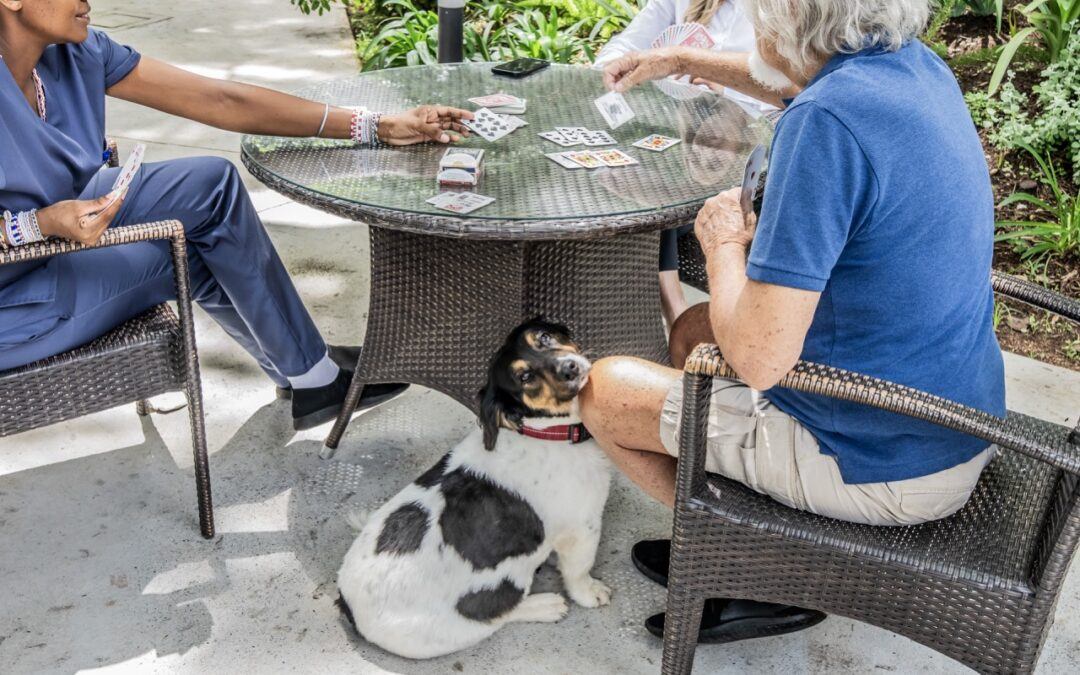
Residents are supported to remain engaged in ways that feel familiar and meaningful. Activities are not simply scheduled to pass time, but designed to reflect identity and purpose. A resident who once enjoyed gardening may continue to spend time in outdoor spaces. Someone with a love for music may engage through familiar songs or rhythm-based activities. These experiences are not incidental. They are intentional forms of rehabilitation that support emotional wellbeing and cognitive engagement.
Care teams also focus on maintaining independence wherever possible. This may involve encouraging residents to participate in daily routines, make simple choices, or remain involved in social activities. These small moments of autonomy play a significant role in preserving dignity and confidence.
Importantly, this approach extends across all stages of dementia. In earlier stages, support may focus on cognitive engagement and structured routines. In later stages, it may shift toward sensory engagement, comfort, and emotional reassurance. The principle remains the same: care adapts to the person, not the other way around.
Moving beyond care to a more complete model of support
The World Alzheimer Report 2025 ultimately calls for a redefinition of what good dementia care looks like. It encourages healthcare systems, providers, and families to move beyond a model of passive care and toward one that actively supports people to live as well as possible with dementia.
This is where the concept of a complete dementia care approach becomes essential. A complete dementia care environment does not separate medical care from emotional support, or daily routines from meaningful engagement. Instead, it integrates all aspects of wellbeing into a cohesive, personalised model that evolves with the individual.
At Livewell Estates, this philosophy is reflected in the way residents are supported holistically. Care teams focus not only on safety and clinical needs, but also on identity, connection, and purpose. By doing so, they align closely with the global direction outlined in the World Alzheimer Report 2025.
A new way of thinking about dementia
Dementia care is changing, and with it, the expectations of what is possible. The shift toward rehabilitation and maintenance does not minimise the realities of the condition, but it does offer a more hopeful and human-centred perspective.
It reminds us that even as memory fades, the need for purpose, connection, and dignity remains. It challenges care providers to do more than support decline, and instead to support life.
For families navigating this journey, this shift offers reassurance. It means that care can be proactive, thoughtful, and deeply personalised. It means that a diagnosis does not mark the end of meaningful engagement, but rather the beginning of a different, but still valuable, way of living.
At Livewell Estates, this belief shapes everything we do.